Client
Completion Date
Designer
Location
Delivery Method
Contract Value
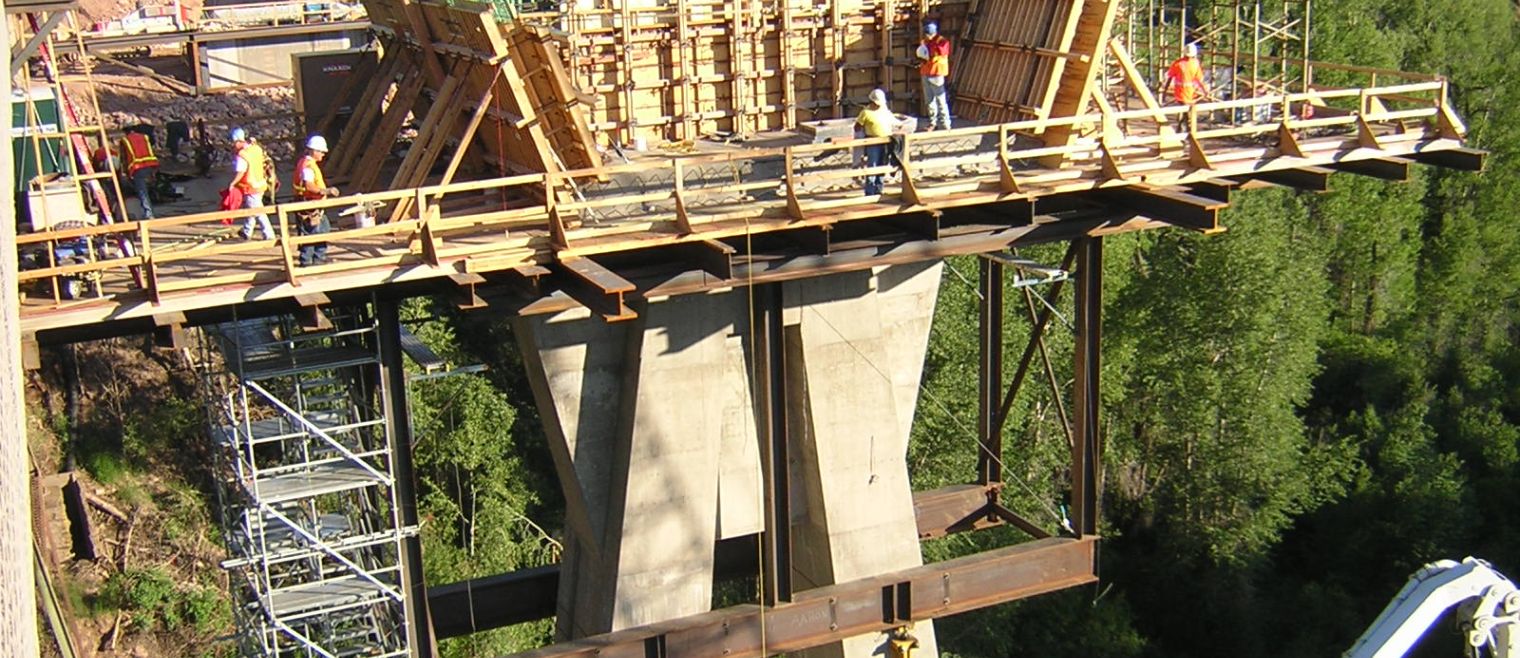
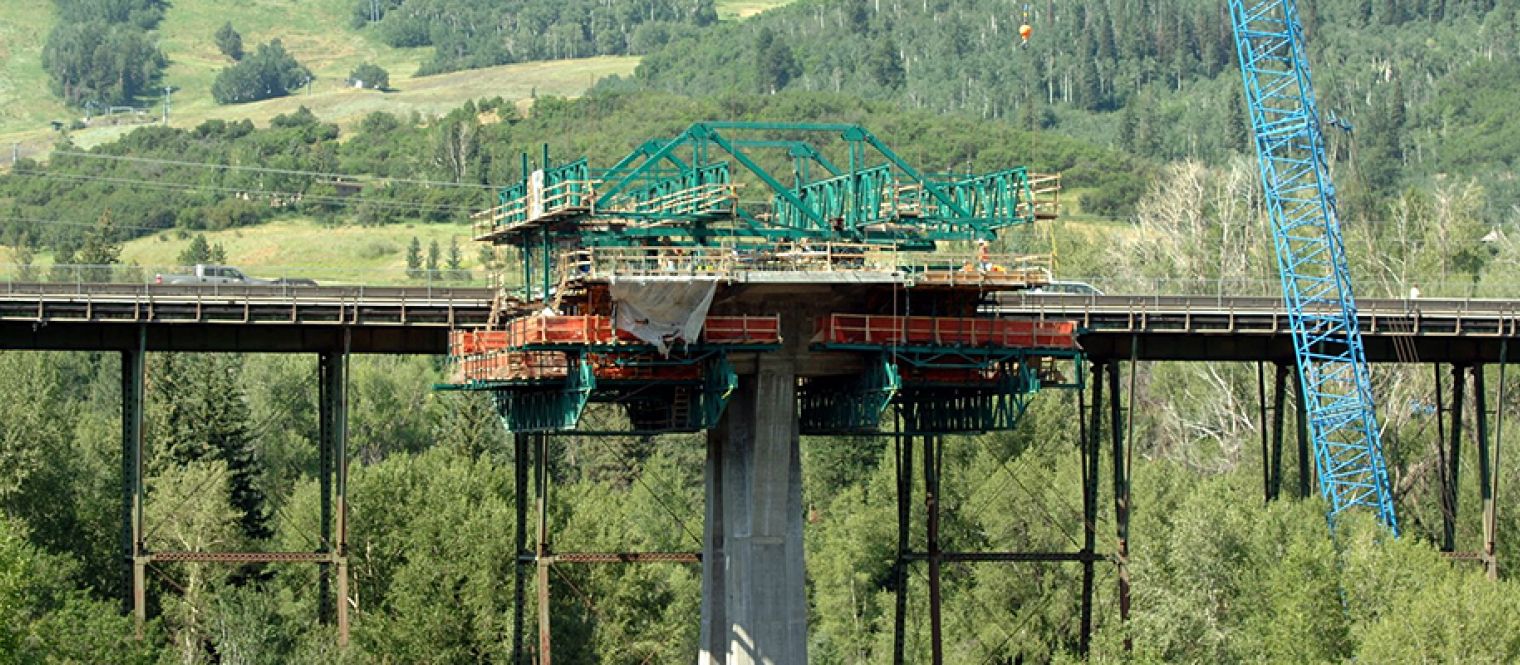
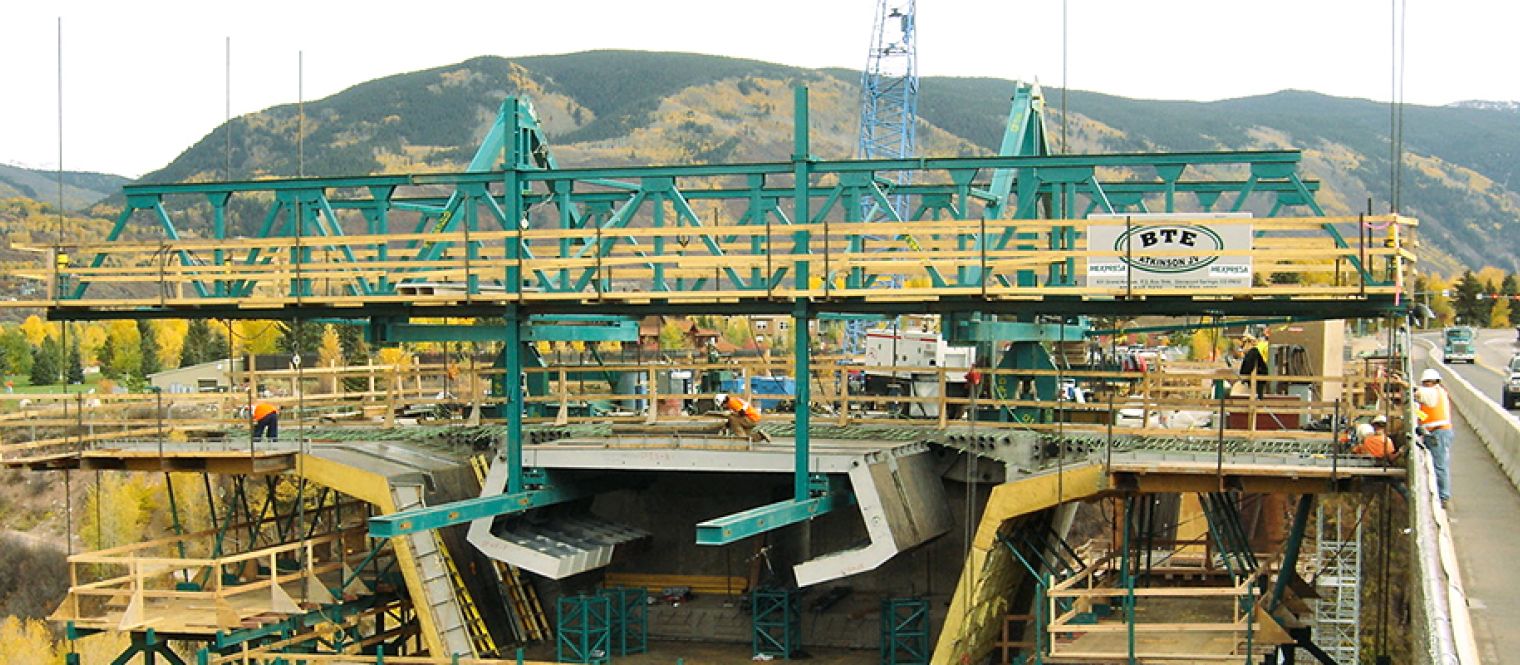
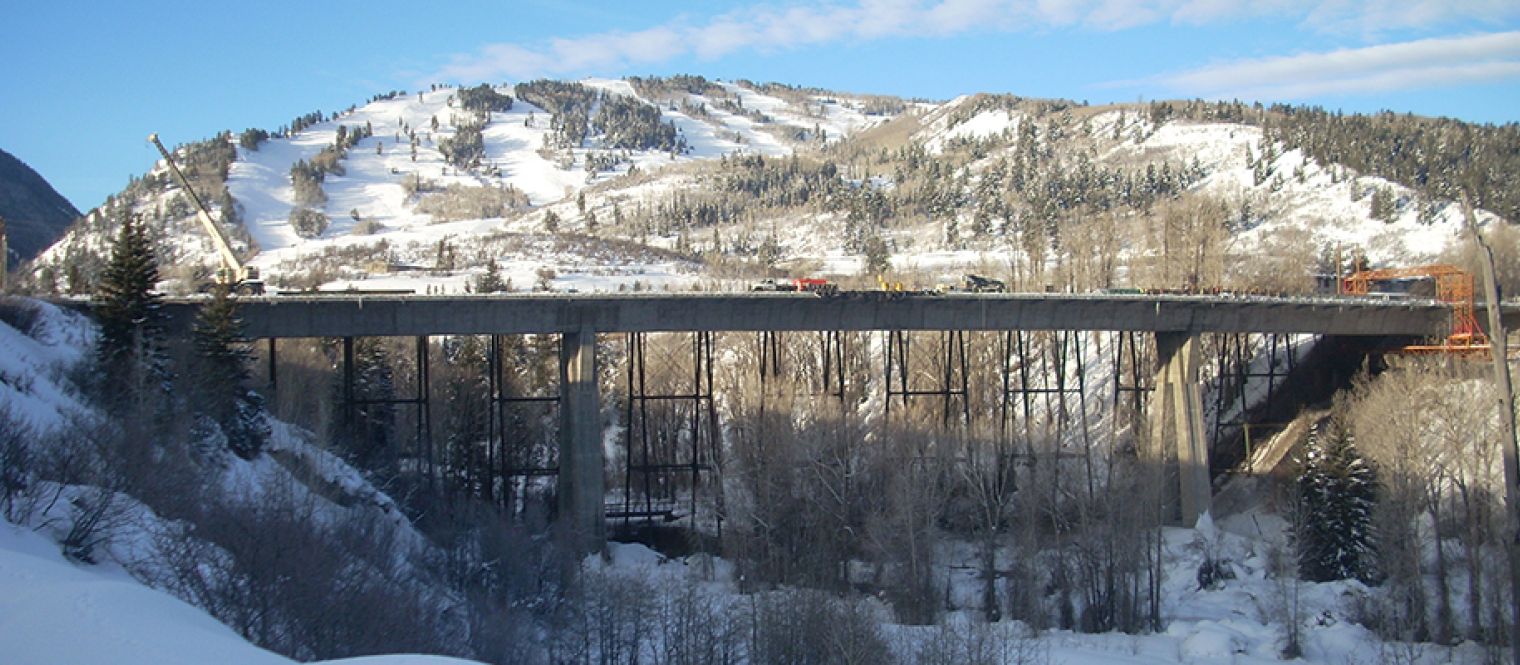
The Maroon Creek Bridge, a collaborative effort involving BTE Concrete and Atkinson, took shape as a cast-in-place, balanced cantilever, segmental concrete bridge designed to accommodate both vehicular and pedestrian traffic. This bridge's construction occurred in proximity to a historic railroad trestle structure, originally built in 1888 and later adapted for automobile use in 1929. The preservation of this historic structure allowed it to continue serving pedestrians and cyclists.
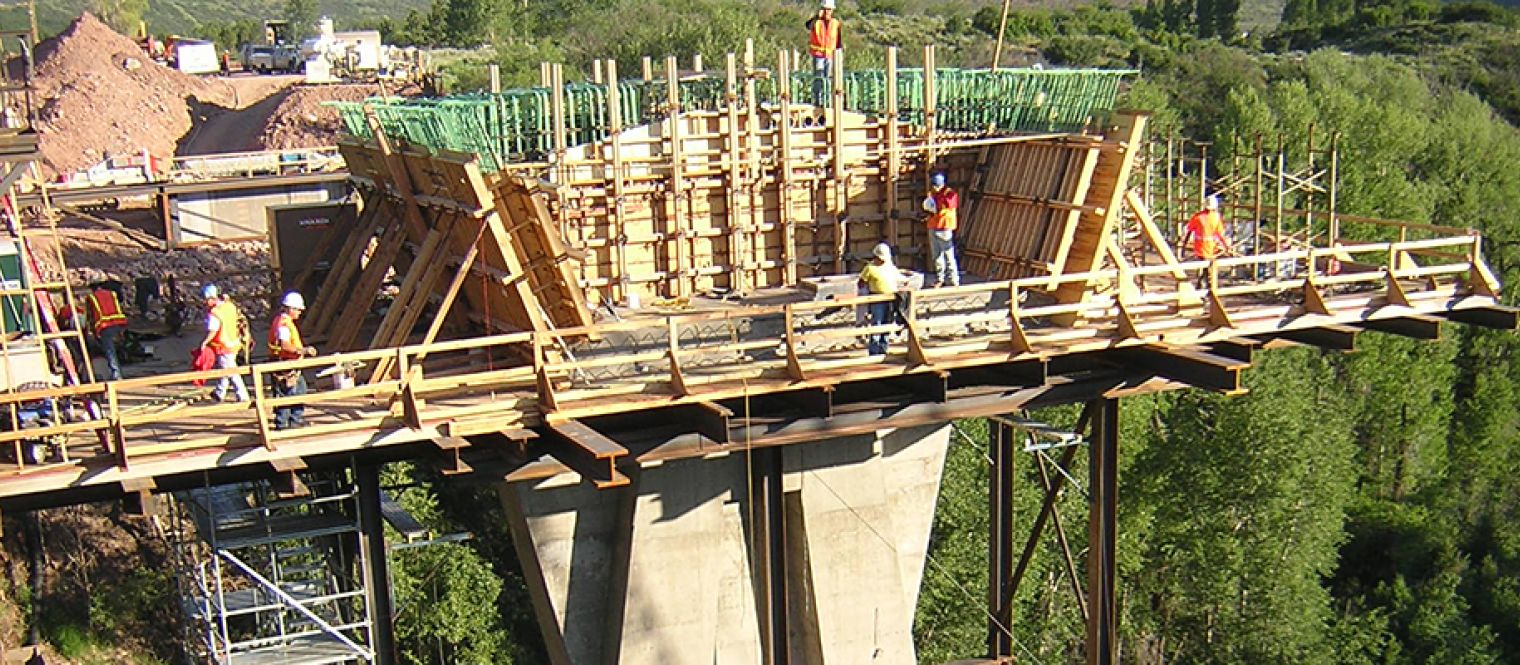
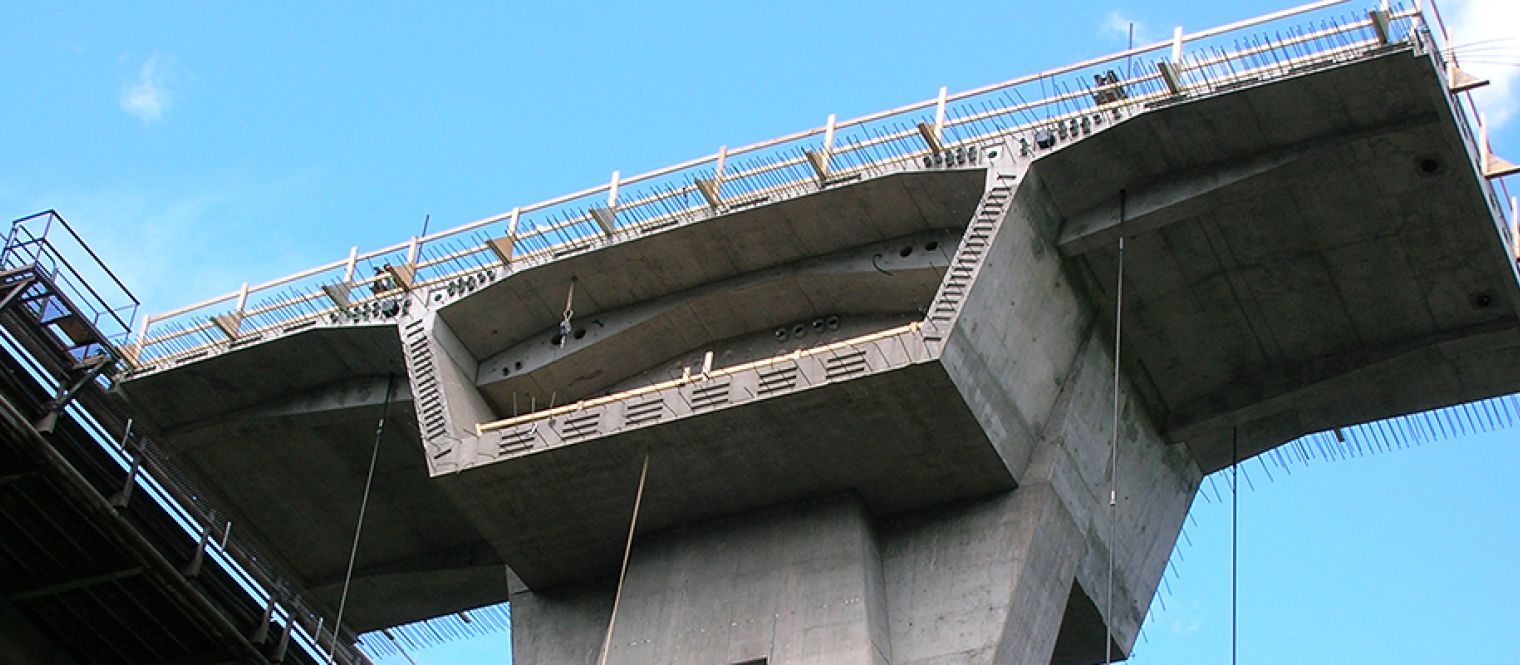
Structurally, the Maroon Creek Bridge features a single-cell configuration, boasting a depth of 13 feet and 6 inches and an impressive width of 73 feet. Anchored by twin piers reaching a towering height of 120 feet, the bridge spans a main section of 270 feet, flanked by back spans extending 170 feet on either side. This engineering feat facilitated the passage of approximately 30,000 vehicles daily across Highway 82, a vital thoroughfare leading to Aspen. The comprehensive project encompassed the construction of new approaches, utility installations, a stormwater treatment tank, and detention facilities. Furthermore, it entailed the restoration of wetlands and a streambed to a sustainable habitat. Notably, a range of tasks, including earthwork, utilities, substructure and superstructure concrete work, post-tensioning, and barrier installation, were carried out without the direct involvement of Atkinson.
A primary objective guiding this project was to achieve construction without any adverse impact on the delicate wetland ecosystem and the gold-medal trout stream it housed. The Colorado Department of Transportation (CDOT) emphasized the importance of habitat preservation and erosion control, a directive that the project team embraced wholeheartedly. To minimize environmental disruption, the deconstruction of the existing 600-foot-long, 125-foot-high, 12-foot-wide concrete and steel pedestrian bridge was executed by removing complete concrete sections in their entirety, as opposed to breaking them up. This process was complemented by the implementation of debris nets for added containment. During the course of bridge construction, meticulous planning ensured that all in-stream work was scheduled to align with two crucial fish spawning seasons: the fall for brown trout and the spring for rainbow/cutthroat trout.
The Atkinson team coordinated environmental inspections with CDOT, the City of Aspen, Pitkin County, and the Colorado Department of Public Health and Environment. In addition, Atkinson designed erosion control measures for the steep slopes, rocky areas, access roads, and areas of frozen ground.